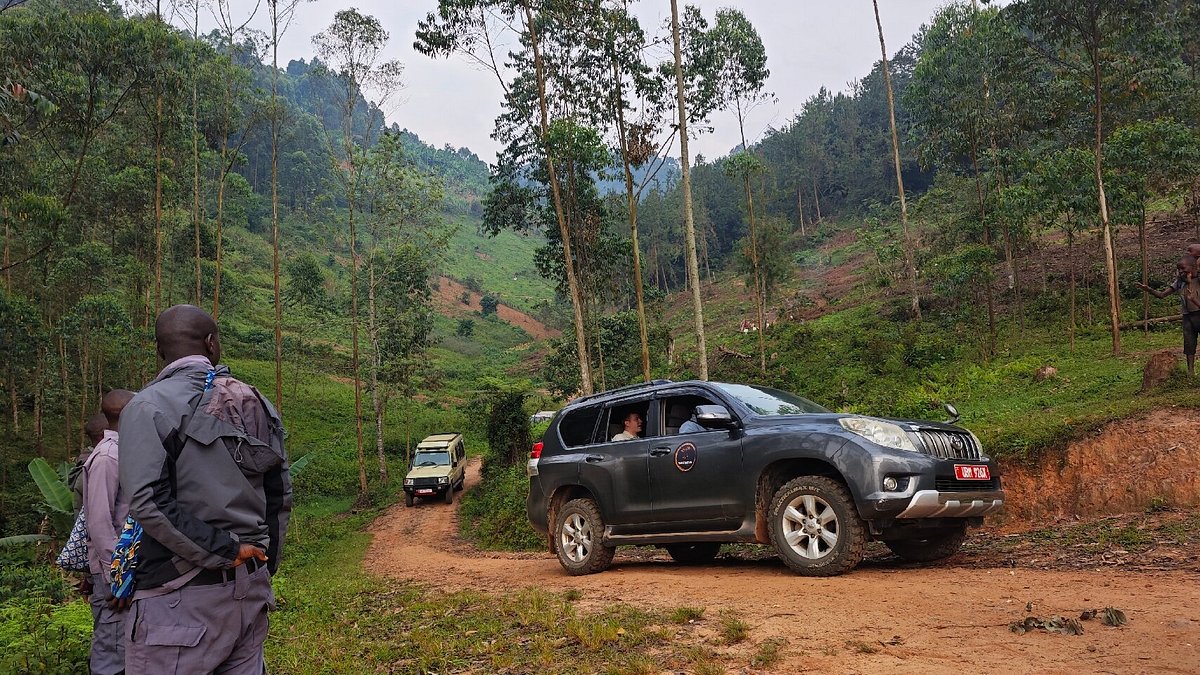
Driving in Kampala has a reputation for being intense, and it is true that the…
4×4 Car Rental Uganda: Rooftop Tent Land Cruiser vs. Lodges
There is a moment, somewhere around day three of a Uganda safari adventure, when the question stops being abstract. You are watching a herd of elephants move silently across the golden grass of Queen Elizabeth National Park as the sun drops behind the Rwenzoris, and you think: where do I actually want to sleep tonight? In a tent on the roof of a Land Cruiser, with nothing between you and that sky but a thin layer of canvas? Or in a lodge with a hot shower, a cold Nile Special, and a bed that does not sway gently when the wind picks up?
Both answers are correct. The question is which one is correct for you.
The Uganda 4×4 car rental market in 2026 offers two fundamentally different safari philosophies. The rooftop tent Land Cruiser experience and the lodge-based safari are not simply different price points — they are different ways of being in the wild. This guide lays out both honestly, so you can choose the one that fits not just your budget, but your temperament.
The rooftop tent Land Cruiser experience
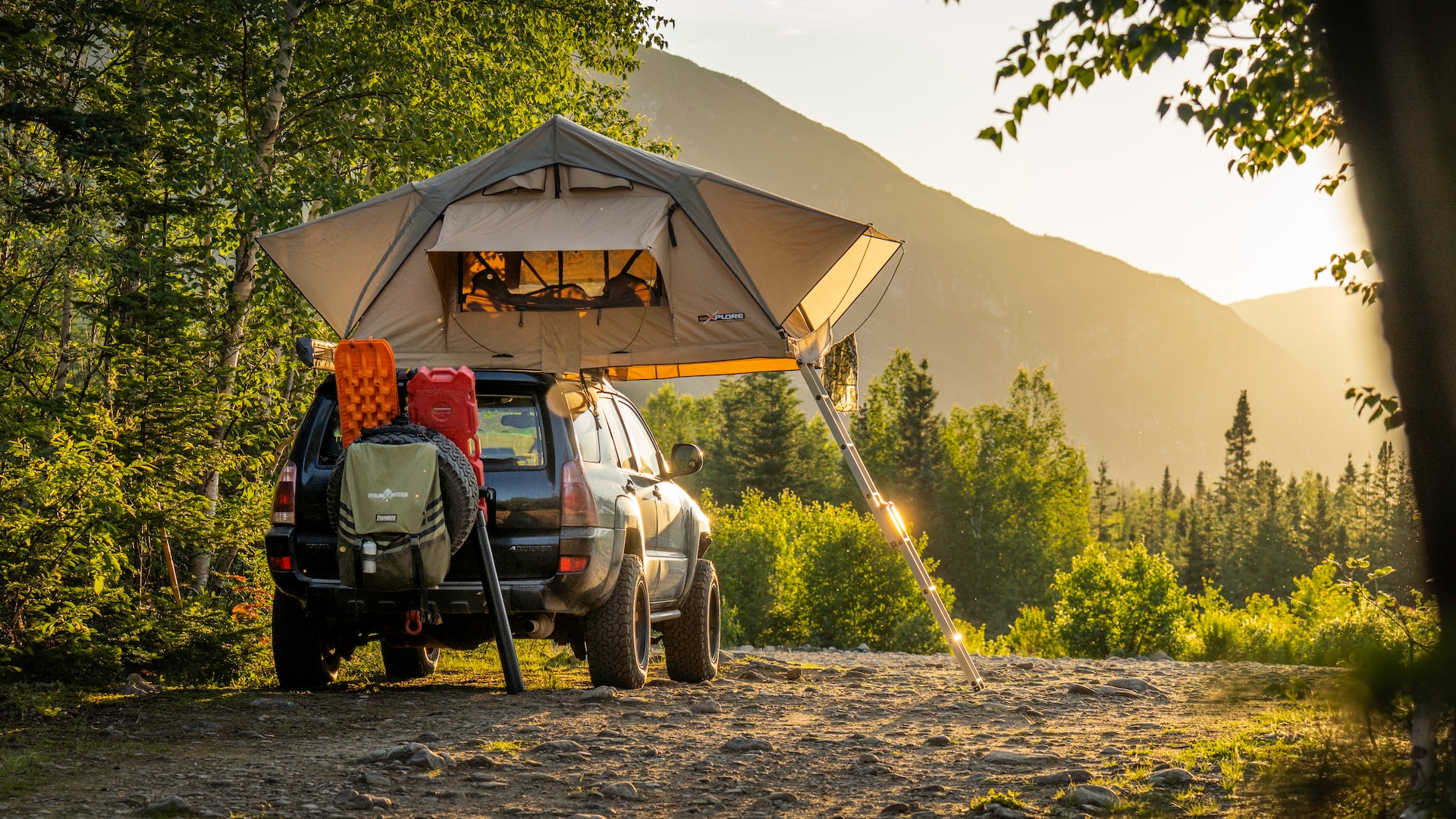
Renting a Land Cruiser with a rooftop tent in Uganda is the purest form of self-drive safari. The setup is straightforward: a Toyota Land Cruiser 70 or 78 Series fitted with a roof rack, on top of which sits a hard-shell or soft-shell rooftop tent that unfolds in under two minutes into a sleeping platform elevated two metres above the ground. The standard rental package typically includes the tent for two people, a foam or memory foam mattress, sleeping bags, a portable gas cooker, cooking pots, a 45-litre cool box, a foldable table and chairs, and a basic toolkit for roadside repairs.
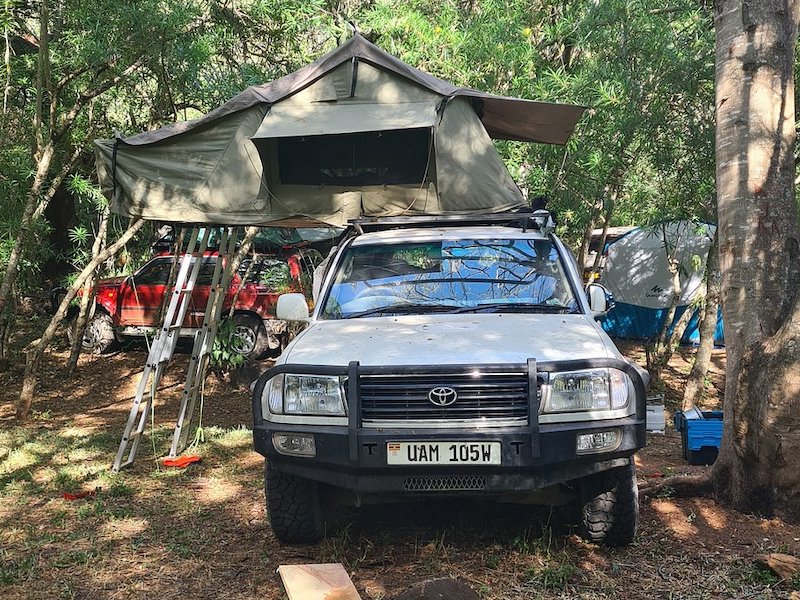
The appeal is immediate and deep. You sleep where the day ends. If a leopard is hunting in the acacia woodland outside Ishasha and the light is fading, you do not need to drive an hour back to a lodge. You stop, make camp, cook something simple, and fall asleep to the sounds of the African bush in a way that no lodge wall, however thin, can replicate. The rooftop position keeps you above ground-level insects, provides a clear sightline across the landscape, and — perhaps most valuably — gives you a psychological intimacy with the environment that is genuinely difficult to describe until you have experienced it.
Freedom is the defining advantage. You move entirely on your own schedule. If the chimps in Kibale are active at dawn, you are already there. If a road closure pushes your route off-track, you simply camp somewhere new. There are designated campsites inside Uganda’s national parks that are well-maintained, affordable — typically $30 to $50 per night — and positioned with extraordinary views. Murchison Falls, Ishasha, and Lake Mburo all have park campsites that place you within earshot of the wildlife rather than merely within reach of it.
The rooftop tent setup typically costs $80 to $130 per day for the vehicle plus $15 to $25 per night for campsite fees. For a couple travelling for ten days, the total accommodation cost is a fraction of what comparable lodge nights would run.
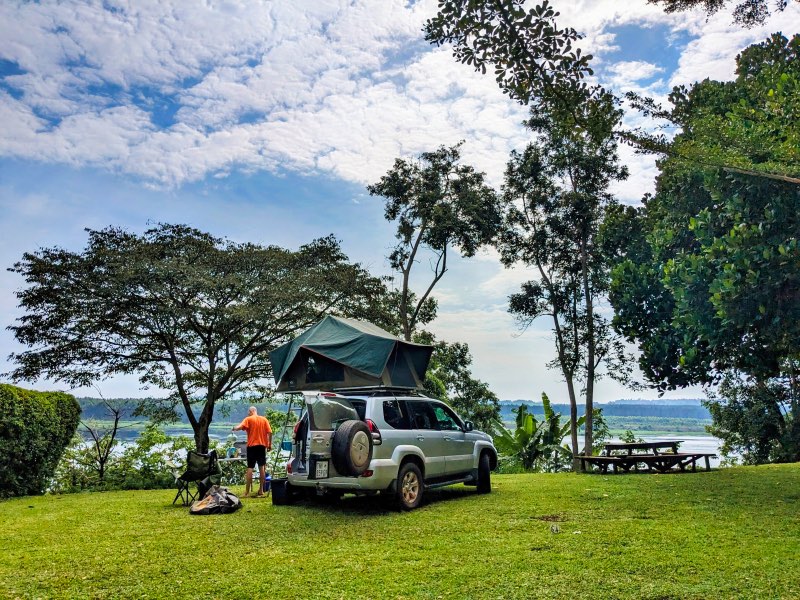
The honest trade-offs are equally worth naming. Camp kitchens require planning — you need to shop for supplies in Fort Portal or Mbarara before entering remote areas, and cooking after a long day of driving and trekking demands more energy than some travellers have left. Security can feel uncertain to first-timers, though Uganda’s national park campsites are well managed, ranger-patrolled, and significantly safer than their reputation among cautious travellers might suggest. And if it rains heavily overnight — which in Uganda it genuinely can, even in the dry season — the experience transitions quickly from romantic to demanding.
The lodge experience
Uganda’s lodge market has matured significantly over the last decade. The options available in 2026 range from basic guesthouses in park buffer zones to genuinely world-class properties that would hold their own against any lodge in East or Southern Africa. Bwindi alone now hosts properties like Bwindi Lodge, Mahogany Springs, and Gorilla Forest Camp, where post-trek evenings unfold on forest-edge terraces with valley views and meals prepared by skilled kitchen teams.
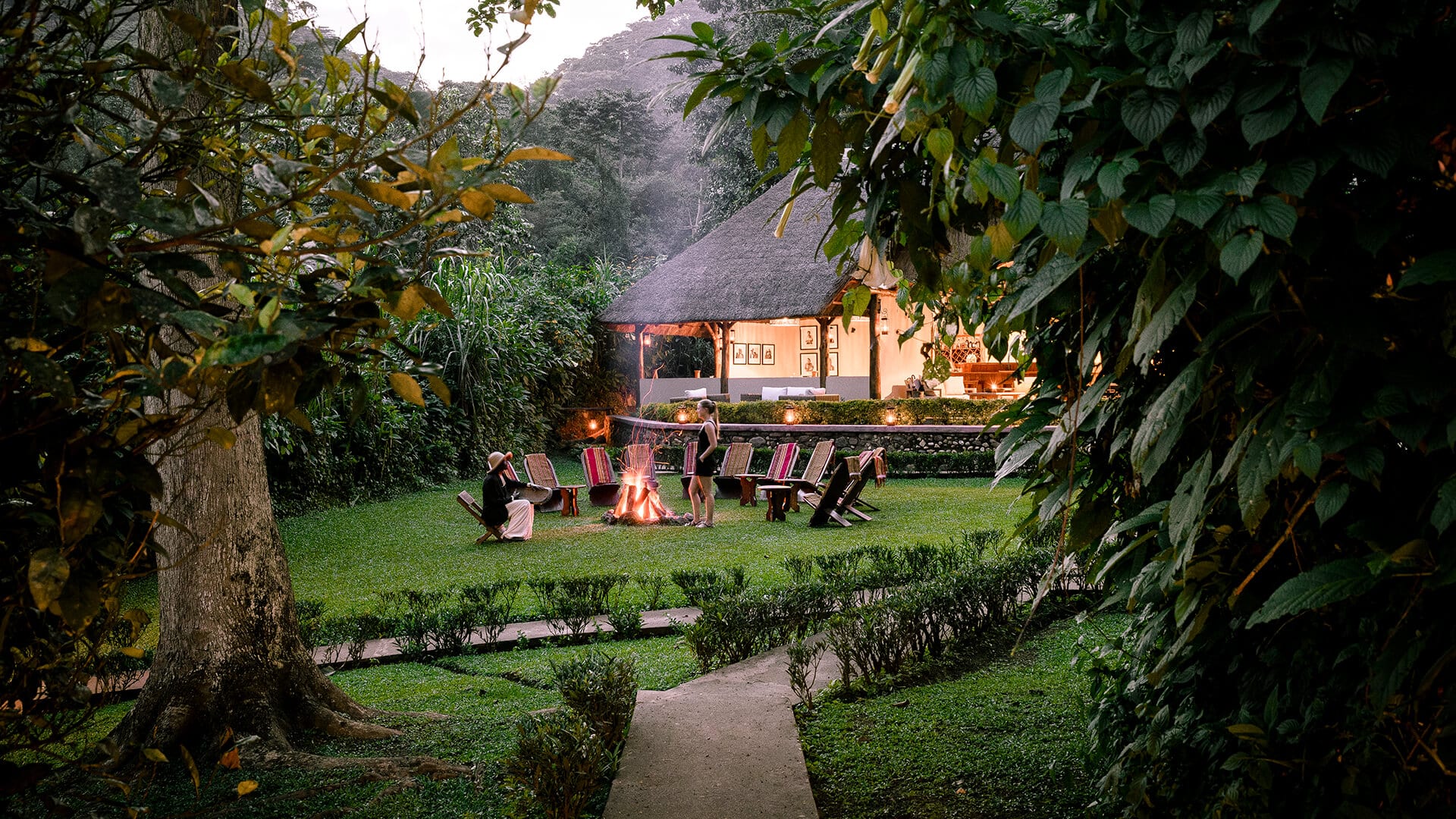
The lodge experience offers something the rooftop tent categorically cannot: complete physical recovery. Gorilla trekking at Bwindi can involve five to seven hours of steep, muddy forest hiking. Chimpanzee tracking in Kibale is less physically extreme but still draining. Returning to a hot shower, a proper bed, and a meal you did not have to cook is not a concession — for many travellers, it is the difference between arriving at the next day’s activity refreshed and arriving depleted.
Mid-range safari lodges in Uganda offering comfortable, clean, well-run properties with en-suite bathrooms, hot water, and good food — typically run from $150 to $250 per person per night including meals. Upper-end properties at Bwindi and Queen Elizabeth range from $350 to $600 per person per night. Budget bandas and guesthouses near park gates can be found for $40 to $80 per person, offering basic comfort without the premium.
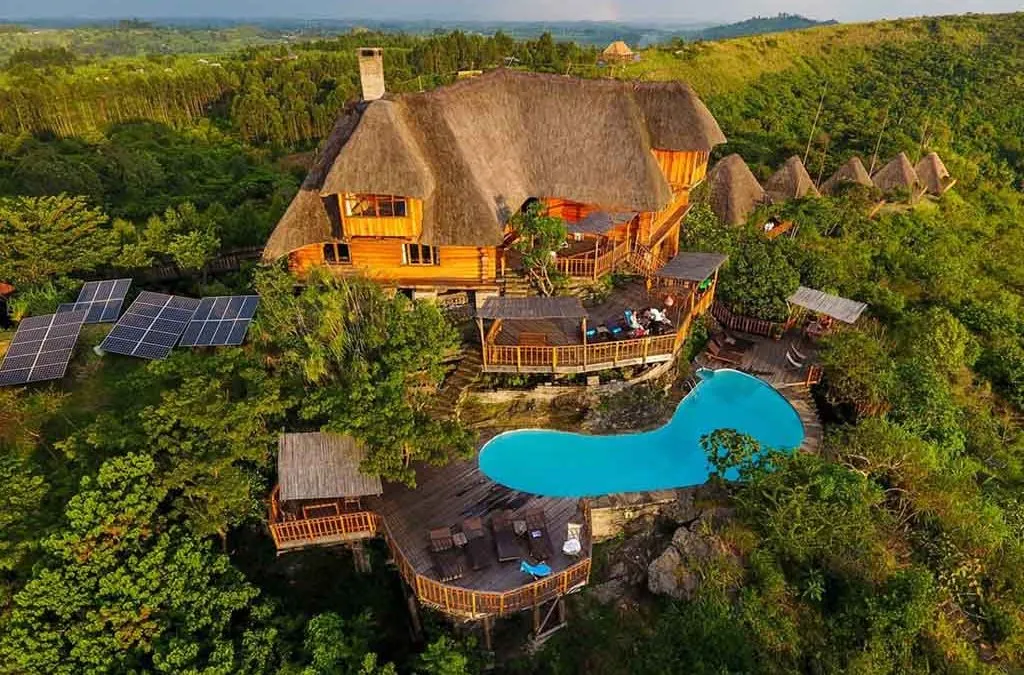
The lodge model also simplifies logistics in a meaningful way. Meals, laundry, and daily activity bookings are handled by staff. Local lodge guides carry deep knowledge of the surrounding area — the birding trails, the best game-drive times, the sections of park that guides know but maps do not show. That embedded local knowledge is genuinely valuable and is often absent from the solo tent experience.
The trade-off is cost and constraint. Lodge-based safaris are significantly more expensive, particularly at the upper end. They also anchor your itinerary — check-in and check-out times, meal schedules, and activity packages mean that the total freedom of the rooftop tent life is replaced by a more structured rhythm. For some travellers, that structure is exactly what they want. For others, it chafes.
Which is right for you?
The honest answer depends on three things: your budget, your travel style, and the specific itinerary you are running.
If you are travelling as a couple or solo, are a confident driver, enjoy cooking outdoors, and want the most immersive and cost-effective way to see Uganda — the rooftop tent Land Cruiser is the superior choice. It puts you closer to the country, rewards flexibility, and delivers memories of a particular texture that no lodge can manufacture.
If you are travelling with children, are on a shorter trip where physical recovery between activities is critical, are celebrating a significant occasion, or simply prioritise comfort after long days in the field — lodges win without argument. The right lodge at Bwindi after a gorilla trek is an experience in its own right, not a compromise.
The best Uganda safaris in 2026 often combine both. Spend the first half of your trip in lodges around Kibale and Queen Elizabeth, where the comfort infrastructure is excellent and the choice is wide. Then move to the rooftop tent for the wilder reaches — Kidepo Valley, the Ishasha sector, the park campsites where the landscape is vast and the lodge options are thin. That hybrid approach lets you experience both philosophies and makes the contrast between them feel intentional rather than accidental.
Planning to rent a rooftop tent Land cruiser in Uganda for your next self drive adventure- contact us now by sending an email to info@rent4x4caruganda.com or call us now on +256-700135510 to speak with reservations team.
Uganda in 2026 rewards those who engage with it on its own terms. Whether your terms involve canvas and a camp stove or linen sheets and a sundowner terrace — or both — the country will meet you there.
Want a meta description for this one, the next article from your list, or a comparison table of top Uganda lodges vs. campsites by park?

Related Posts